

Introduction
The estuary’s unique environment is one of constant change, neither river nor sea water but a changing mixture of the two, with levels of salinity (dissolved salt concentration) occurring in zones ranging approximately from 5 to 30%. The mixing of fresh and sea waters and tidal movement create changing levels of salinity and nutrients, providing a fertile environment that can support large populations of animals, particularly invertebrates, fish and birds.
Estuary Habitats
Ditches
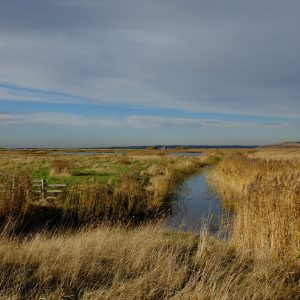
Ditches are key landscape and conservation features of the grazing marshes. The ditch network is calculated to be over 2000 kilometres in length and is used to control water levels within the marshes and to provide wet fences for the management of livestock. With sympathetic management, ditches can provided important habitat for a number of species.
Grazing Marsh

Grazing marsh is an area of periodically flooded pasture or meadow with ditches containing brackish or fresh water. The majority of grazing marshes around the estuary are semi-natural in origin; the result of containment, drainage and grazing. Grazing marsh provides important high tide roosts for waders and wildfowl and in spring, habitat for significant proportions of the estuary’s breeding birds.
Mudflats
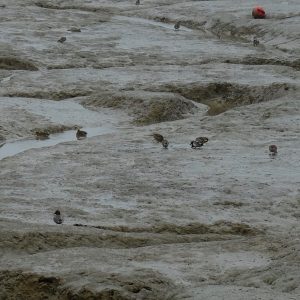
Mudflats are intertidal habitat comprising soft sediment exposed at low tide. They are not vegetated, except for the presence of eelgrass (Britain’s only flowering marine plant) which occurs in sheltered sections of the estuary. Mudflats are highly productive ecosystems enabling them to support large numbers of invertebrates, waders and wildfowl. A square metre of mud contains the energy equivalent of sixteen chocolate bars. The mudflats of the estuary are the most extensive in Kent.
Reedbeds

These are important for a variety of wetland plants and animals, which have been in decline for a number of years, leading them to be designated a UK BAP habitat. They are dominated by the Common reed (Phragmites autralis), which can grow to over four metres in height.
Salt marshes
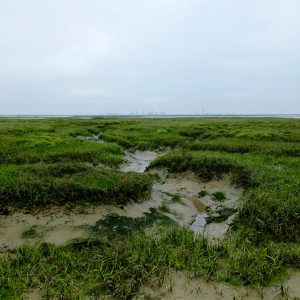
Saltmarshes are formed on mudflats that are high enough to be colonised by specialist plants capable of being frequently submerged in salt water. The plant roots and stems help bind the mud and surface vegetation, which slows down the flow of water, encouraging more silt to be deposited. This process enables the saltmarsh to maintain its height.
Seagrass Beds

There are four native species of seagrass in the UK, two of which are tasselweed species and two of which are Zostera species (usually referred to as Eelgrass and the species found in the estuary). Seagrass is a hugely important habitat feature, providing food for wildfowl such as Brent geese and shelter for juvenile fish and shellfish. Seagrass beds also play an important role as carbon sinks and help to reduce coastal erosion by reducing wave energy and trapping sediment.
Seagrass and boating
Boaters can help protect the estuary’s seagrass beds by:
- Not anchoring above them.
- Avoiding shallow water at known seagrass locations, as propellors can cut through the beds causing long term damage.

Map of known seagrass beds across the estuary (courtesy of Natural England). Click on map to enlarge. Note: The markers do not accurately reflect the size of the individual beds, only their approximate location.
Sea Walls

Built for flood defence, these form large expanses of grassland around the estuary. Many plants of interest occur along the estuary’s sea walls. The seaward wall of the embankment often supports plants typical of the upper zone of saltmarsh (less common naturally due to the presence of the sea walls) which can tolerate frequent inundation. Where clay has been extracted for sea wall construction, ‘borrow-dykes’ have been created, providing important reedbed habitat.