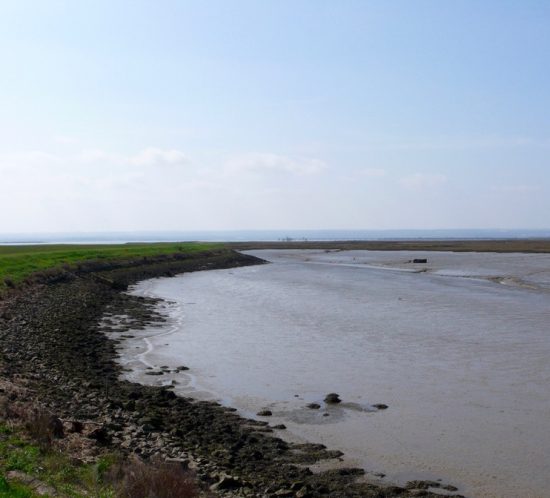
People have lived and worked around the estuary for thousands of years. As a result it is rich in both archaeological and historical remains including: Prehistoric droveways, Roman pottery kiln sites, Anglo Saxon fish traps (known as Snowt Weirs), numerous military installations (including Rochester and Upnor castles) and two historic dockyards at Chatham and Sheerness. To the east, Faversham was a major producer of gunpowder from the 16th century and is home Chart gunpowder Mills ( the oldest of its kind in the world). Throughout the 19th and early 20th centuries, the estuary was home numerous cement works and brickfields, producing much what helped build the rapidly expanding suburbs of London.
Today the estuary is of national and international significance, both environmentally and economically. As a major trading route, it is home to several important shipping terminals, handling a wide range of products and raw materials. Since 2005, it has also played a key role in the UK’s energy supply network, with the country’s first Liquified Natural Gas (LNG) terminal situated on the Isle of Grain.
Despite this industrial landscape, the estuary continues to support an impressive and diverse ecosystem, providing the perfect habitat for thousands of breeding and wintering birds, protected by both national and international designations, the details of which can be found here (the Medway) and here (the Swale). In 2013 the Medway Estuary was designated a Marine Conservation Zone (MCZ), protecting one species (the nationally scarce tentacled lagoon-worm) and eight different habitats, including peat and clay exposures, an uncommon habitat formed millions of years ago from ancient lakebeds and forested peatlands. More recently, in January 2016 the Swale was also designated a Marine Conservation Zone, primarily for its importance as a spawning and nursery ground for several species of fish, which find shelter in its seagrass and mussel beds.
Registration is now open for the free Greater Thames Estuary Restoration Conference, taking place at the Zoological Society of London (NW1 4RY) on the 9th November 2026. Connecting Practice and Learning Across the Thames Estuary, the conference will bring together restoration practitioners, landowners, regulators and......
As part of Natural England’s work on the long distance path around England’s coastline, they are holding a number of drop-in sessions this summer, in order to discuss the section of path between Grain Village and Iwade (due to open in 2018). Dates and locations are as......
As part of the development work for the Guardians of the Deep HLF project, Natural Values (an independent management and environment consultancy) was commisioned to produce a gap analysis report, in order assess existing public engagement in the marine environment, identify target audiences and to undertake consultation......