

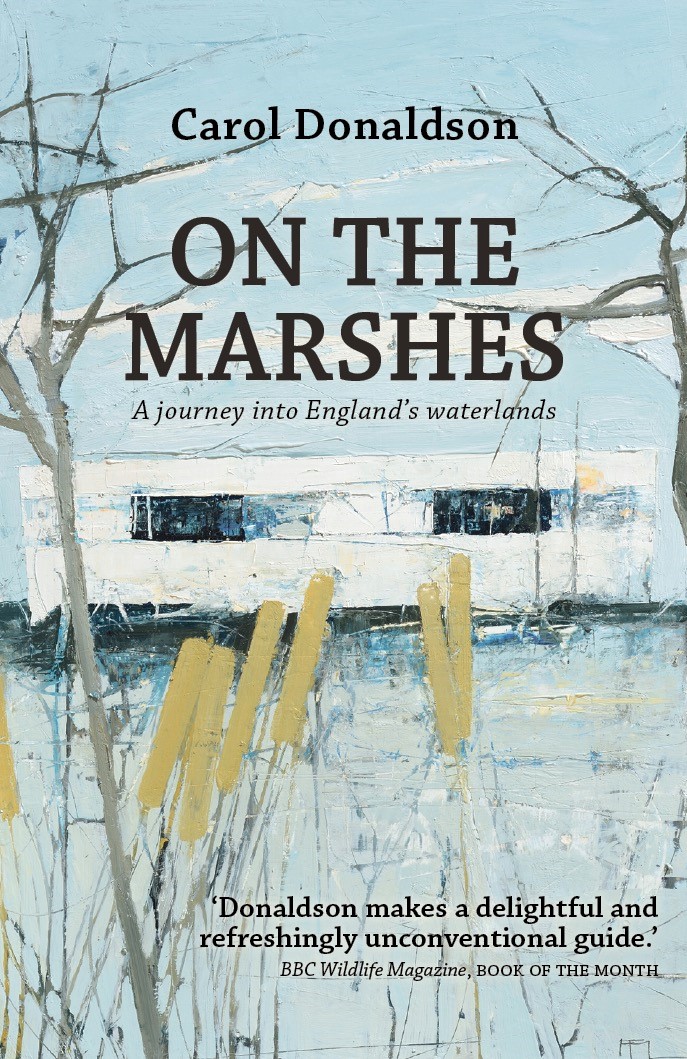
On the Marshes by Carol Donaldson – An Extract
I was now on Elmley Marshes. From my viewpoint on the sea wall the whole of the Isle of Sheppey stretched away, the hills rising from Queenborough to Minster and falling from Wardens Point to Leysdown. The rain was coming in again. A rising wind blew at my back, cooling my sweat. I walked past saltmarsh sculpted into pillars and curves. There was something untamed about this land; the sea and the wind still governed a landscape carved by tides and eddies. In his book, Changing Corners of North East Kent, the artist B E Beach described the coastline: “There was something hauntingly primeval about it all. The sprawling, oozing expanse of mud and tufty random patches of saltmarsh. The horizontal streaks of receding islands, things half submerged, half discernible, the scene of emptiness and space all contributed to a strange feeling that here one was among the earliest glimmerings of things, the slimy beginning of the world.”
I crawled along through the ‘slimy beginning of the world,’ long grass tore at my dragging feet, spiders’ webs full of dead creatures clung to me. The rain began to fall. I reached Dan’s Dock, now just a broken jetty at the end of the ruins of the Elmley brickworks.The brickworks once covered about 25 acres of Elmley Island and included cottages, drying sheds and kilns, but the industry itself lasted only ten years before making way for cement.
I flopped down at the dock on a piece of yellow, lichen-covered driftwood, with a blank-eyed, desiccated rabbit at my feet. I was caught in that now familiar end-of-the-second-day slump, when my brain and legs had become jelly. Storm clouds heaved towards me, sharpening the light, slivering the sedge and casting blackness into the ditches. Marsh harriers drifted across the track, a wheatear sat bobbing on a fencepost before flitting away, flashing the white rump that had given the bird its original name of “white arse”. The air smelled of molasses from a paper mill.
I walked on, past the remains of Elmley village, once a thriving community of 150 houses, a school, a church and pub called The Globe, built to house the staff of the Elmley Cement works. Now all that remained were a few headstones and the broken schoolhouse. The cement works closed in 1900 and every year there was less to see. The roof of the school had collapsed in the previous year’s gales, taking with it the high vaulted windows. Prior to that, the building had still had elegance; now it was a broken ruin like so many other buildings on the marshes, finally succumbing to wind and rain and the changing fortunes of industry.
An indignant little owl burst from the ruins and landed in a tree, glaring at my intrusion. Hawthorns were ripening in the hedgerow as I walked up the track towards Kingshill Farm.
‘On the Marshes’ is published by Little Toller Books, priced £10. The author will be leading a walk at Elmley National Nature Reserve, as part of this year’s ‘Sheppey Shorelines’. See here for details.